Brand authenticity frameworks and expert tips for marketing leaders

Customers encounter your brand promise in campaigns and everyday materials. It shows up in a rate sheet a loan officer sends before a client meeting, a presentation a sales rep shares, and a flyer a local office creates for an event. When those materials look outdated, contradict your messaging, or miss required information, customers notice the gap.
That gap weakens brand authenticity. People form their impression of a company from the consistency between what it says, what it shows, and how it interacts with them.
This article explains what brand authenticity means, why it matters, and how marketing leaders build it across teams and locations.
What is brand authenticity?
Brand authenticity is the degree to which a company’s marketing and messaging accurately reflect its products, values, and actions.
Customers decide whether a brand earns that label. A company can write its values into a brand book, but customers judge the brand by the ads, sales materials, service calls, and invoices they actually receive.
Authenticity in branding overlaps with brand identity design, but the two answer different questions. Your team designs the identity. Customers decide whether that identity matches their experience. That gap is why authenticity matters at every stage of brand building, from the first logo to the thousandth branch flyer.
Why brand authenticity matters
Buyers now weigh trust as heavily as price and quality. In Edelman’s brand trust survey of 15,042 people across 15 countries, 88% of respondents said trusting a brand is important or a deal breaker when they choose what to buy. The same share said this about best quality and about good value. A brand that loses trust gives up ground on one of the three factors buyers weigh most.
Customers also trust what they experience over what you tell them. In the same survey, 70% of respondents said their own experience with a brand’s products, service, website, or stores at least moderately shapes their opinion before they buy. Only 50% said the same about the brand’s ads, website copy, and social posts. More ad spend won’t fix a problem customers can see for themselves.
In a study in the Journal of Business Research, a survey of 380 brand users found that respondents who saw a brand as consistent, believable, and honest engaged more with it.
That engagement was in turn linked to stronger intent to use the brand and greater willingness to pay a price premium. Loyalty and revenue can follow, but no study guarantees them.
Maintaining brand authenticity becomes harder as more people create content for your company.
A brokerage with 3,000 agents sends out thousands of listing flyers, postcards, and social posts each month. Each piece either matches the brand promise or contradicts it. Brand consistency across those pieces is one of the few parts of authenticity your team can manage directly, and it gives you a base for building brand trust.
The 3 traits of an authentic brand: reliable, respectful, real
Cohn & Wolfe’s study, which surveyed nearly 12,000 people across 14 markets, identified reliability, respect, and realness as the three traits consumers associate most with authentic brands. Marketing teams can use these traits to assess their content: does it deliver on its promises, treat customers fairly, and communicate honestly?
Reliable: Keep your promises
Reliable brands give customers what they promised, in the same form, wherever customers meet them. That means doing what you say and staying recognizable over time.
Reliable brands:
- Start with a clear brand promise and attach a date and an owner to every claim that supports it
- Retire old file versions the day a fact changes
- Keep logos, colors, and required language identical across locations
Rick Rybarczyk, Director of Marketing at Engel & Völkers Gestalt Group (a real estate brokerage with 50 offices in seven states), puts consistency at the center of good marketing:
“Consistency, along with speed and accuracy are the cornerstones of good marketing.“
– Rick Rybarczyk, Director of Marketing, Engel & Völkers Gestalt Group

Build brand trust through consistent content
Using Marq, you can give your teams approved templates and brand assets so every customer-facing material reflects your brand promise.
Respectful: Put the customer first
Respectful brands make claims they can support, present important information clearly, and respect the customer’s time. Customers look for evidence that a company acts responsibly and considers their needs.
An insurance agency might advertise “savings up to 40%” in large type, with the conditions buried in fine print on the back. The agent creating the postcard could also remove the required state disclosure to make room for a photo. The customer may feel misled when the quote arrives with conditions that the postcard buried in fine print.
Respectful brands:
- Phrase each claim at the level the evidence supports
- Keep disclosures and qualifications as easy to find as the claim itself
- Give customers the short version first, such as a one-page policy summary before the full brochure
Real: Communicate like a human
An authentic company uses plain language to address each audience’s concerns while keeping its core message consistent. Customers connect with brands that reflect values they hold.
Let’s use a university example. The athletics department and the alumni office often write to the same graduates. Athletics promotes game days. Alumni relations asks for gifts toward a new research building. Both pieces should sound like the same university, and each should speak to a different reason graduates feel connected to it.
Real brands:
- Write in the words customers use, guided by a documented brand voice
- Let local teams add local details, such as an agent’s name, a campus event, or branch hours
- Use real people, places, and stories
5 practices to build brand authenticity at scale
Each practice prevents a common mismatch between your marketing and the customer’s experience.
1. Define a promise customers can verify
A vague value like “We put clients first” gives customers nothing to check and gives your teams nothing specific to deliver. Write each promise as an outcome a customer could verify.
A real estate brokerage might replace “We put clients first” with “Every new listing gets professional photos and a printed brochure within 48 hours of signing.” Agents now know exactly what to deliver, and sellers know what to expect.
To put this into practice:
- List the three to five promises your marketing makes most often
- Rewrite each one as a measurable outcome with a time frame
- Drop any promise your operations team can’t deliver today
Build these promises into your brand marketing strategy so every campaign starts from the same commitments.
2. Assign an owner to every claim
Every claim needs evidence, and someone has to keep that evidence current. A claim register gives each claim an owner, a source, and a review date.
| Claim | Evidence | Owner | Review |
| “Fee-only financial advice” | Current fee schedule and advisor agreements | Compliance Lead | Quarterly |
| “Orders ship within five business days” | Shipping dates in each customer’s order tracking | Operations manager | Monthly |
| “Serving the region for 40 years” | Founding records | Marketing Director | Annually |
Take a wealth management firm that advertises fee-only advice. The compliance team confirms the wording each quarter, and advisors use the approved sentence without rewriting it. When the fee model changes, the owner updates the claim before anyone prints a new brochure.
Pro tip:
Add approved wording for regulated claims directly to your content templates and lock it in place. Reps working under tight deadlines often paraphrase claims, which can remove the qualification that keeps the statement accurate.
3. Check that operations can deliver before you publish
Marketing teams create authenticity problems when they promise something the operations team has not planned to deliver. Share each campaign brief with the people who will deliver on it, before launch.
Here is a common higher education example. An admissions campaign promises “a personal reply within 24 hours.” The admissions office has two counselors and learns about the campaign from the first wave of emails. By the end of week one, replies take five days, and prospective students conclude that the university overpromises.
To prevent this:
- Send the campaign brief to the delivery team well ahead of launch
- Ask them to confirm, in writing, that they can meet each promise at the expected volume
- Change the copy or the staffing plan before launch, whichever is faster
4. Keep expression consistent across channels and locations
Off-brand content often emerges when local teams need materials quickly and lack timely design support from the central team.
A creative strategist at an 11-branch financial institution described the pattern:
“Someone is like, ‘I need this. I don’t want to bother you. So I’m just gonna make it myself.’ So, rogue.“
– Creative strategist at an 11-branch financial institution
Those homemade versions spread, and the brand team loses track of what customers actually receive. A creative-services manager at a multi-state healthcare organization explained what happens next:
“Then we start losing version control. We get requests down the line for something we created, and we look at it and it’s like, ‘That’s not what we created.‘”
– Creative-services manager at a multi-state healthcare organization
To keep every version recognizable:
- Keep one approved source for each asset type, such as flyers, rate sheets, and event posters
- Lock the logo, colors, and required disclosures, and leave local details editable
- Make approved files easier to find and use than files people create themselves.
- Retire outdated files on a schedule
Keep your brand authentic with Marq
Lock core brand elements while letting local teams customize approved content, helping every location stay consistent without losing its local voice.
5. Listen for gaps and act on them
Customers tell you where your promises fall short. They say it in reviews, sales calls, support tickets, and conversations with front-line staff.
An insurance carrier’s ads promise “a real person in minutes.” Its reviews mention 40-minute hold times again and again. The carrier has two options: add claims staff or change the ad. Repeated reviews about hold times can further reduce customers’ trust.
To build this habit:
- Pull recurring themes from reviews, support tickets, and sales notes each month
- Compare each theme against your current claims and campaigns
- Assign each gap to an owner who will fix the operation or revise the message
How marketing leaders measure brand authenticity
Start by asking customers how they perceive your brand, then track supporting signals such as trust, reviews, and repeat business. These measures reflect other factors, including price, convenience, and service, so use them alongside direct customer feedback rather than as measures of authenticity on their own.
For each measure, define who you’ll survey or track, how often you’ll collect data, and who will own the results.
- Customer authenticity pulse check. Ask customers to rate your brand on a short set of statements using a consistent scale. The following questions offer a starting point for gathering feedback. For a more rigorous assessment, consider using the 15-item perceived brand authenticity scale developed by Morhart and colleagues, which measures credibility, integrity, continuity, and symbolism.
- “This brand does what it says it will do.”
- “This brand is honest with customers like me.”
- “This brand reflects values that matter to me.”
- “This brand has stayed true to what it stands for.”
Sample: Survey customers across relevant regions and business lines. If you want to compare these groups, plan your sample around each group and collect enough responses to make meaningful comparisons.
Cadence: Quarterly or twice a year.
Owner: Brand or Insights Lead.
- Brand trust and sentiment. Add a trust question to your customer survey and track sentiment in social media and review mentions.
Cadence: Monthly for sentiment, quarterly for trust.
Owner: Brand or Communications Lead. - Net Promoter Score (NPS). NPS measures whether customers would recommend your brand to others. Read it alongside your customer survey results to understand how perceptions of authenticity relate to customer advocacy.
Cadence: Quarterly.
Owner: Customer Experience Lead. - Review themes. Group reviews by theme each month and flag feedback that conflicts with your current claims. A brokerage that promises fast listing launches, for example, should monitor reviews mentioning delayed photos or brochures.
Cadence: Quarterly.
Owner: Marketing Operations. - Repeat purchase and retention. Track whether customers return or continue doing business with you after their initial experience.
Cadence: Quarterly.
Owner: Revenue or Customer Success Leader. - Brand consistency audit. Each quarter, review a representative sample of assets in circulation, such as branch flyers, rep one-pagers, and social posts. Check each asset against your brand guidelines for current logos, correct disclosures, approved claims, and up-to-date pricing. Report the share that meets these standards.
Cadence: Quarterly.
Owner: Brand Manager.
Common brand authenticity mistakes (and how to avoid them)
| Mistake | Why it backfires | How to fix it |
| Broad environmental claims such as “eco-friendly” or “sustainable” without evidence | Regulators in the US and Australia expect companies to substantiate these claims, and customers who look for proof find none | Name the specific benefit, keep the evidence on file, and place any qualification right next to the claim |
| Values statements with no matching action | Customers compare the statement with the company’s conduct and decide it’s for show | Publish a value only with a specific action, budget, or result attached |
| Different messages across channels and locations | Customers see one promise online and another on a branch flyer, so they stop trusting either one | Keep one approved source per asset, lock core brand elements, and retire old files on a schedule |
| Superlatives like “best,” “#1,” or “guaranteed” | One unsupported claim makes customers doubt the claims you can prove | Use only claims your claim register supports, with a source and a date |
| Copying another brand’s “authentic” style | The copied style may conflict with your company’s history and established voice, and may not fit customer expectations | Build content from your own people, locations, and customer stories |
| Generic AI-generated images and copy | AI-generated images that misrepresent real people or products can mislead customers and undermine trust when they discover the images don’t reflect reality | Use real photography for people and products, and label AI-generated images |
Brand authenticity examples from multi-location organizations
Each one shows how consistent execution supports one or more of the three Rs.
@properties | Christie’s International Real Estate
The brokerage supports more than 3,500 agents across 44 offices. Getting one template from an outside vendor took four to six weeks, so agents either waited or built their own.
Now the design team uploads InDesign files to Marq, locks the branding, and publishes templates agents can use within minutes. Agents send print, web, and social materials that are on-brand. Chief Marketing Officer Natasha Patla explains why distribution matters as much as design:
“We want our agents to be able to grow their business with very strong marketing, but content is only as good as you can distribute it.“
– Natasha Patla, Chief Marketing Officer, @properties | Christie’s International Real Estate
Johns Hopkins University
A four-person creative strategy team supported thousands of staff across nine schools and four campuses. Wait times reached three to four weeks, so staff hired freelancers or made their own materials.
The team now builds templates with smart fields that load the correct school logo automatically, and staff can turn around an on-brand flyer in a day. Director of Creative Strategy Abby Jackson describes how the communications office’s role changed:
“It’s allowed us in the communications office to stop coming in as the brand police and instead be a true partner who has a solution to help people with their work.“
– Abby Jackson, Director of Creative Strategy, Johns Hopkins University
PT Solutions
The physical therapy provider grew to 550 locations in 25 states. Acquired clinics brought strong local reputations, so the team needed dual-branded materials during each transition.
Governed Marq templates, connected to the company’s MediaValet DAM, let clinic and sales teams produce flyers and referral cards the same day. Before, they waited two to four weeks. Regional teams now self-serve more than 300 projects a month. Malia Hostetler, Senior Manager of Creative Solutions, describes the change:
“Now, when our sales team needs something, they don’t have to wait. They can open a template, drop in the details, and get it out the door the same day.”
– Malia Hostetler, Senior Manager of Creative Solutions, PT Solutions
How Marq helps growing teams maintain brand consistency
When customers encounter conflicting messages, visuals, or information across a brand’s touchpoints, they may question how reliable the business is. Consistent brand execution helps build recognition and reinforces trust by giving customers a familiar, dependable experience across locations and channels.
Marq is a brand templating platform for marketing and communications teams at growing organizations. It helps central teams establish approved brand standards and gives every location, representative, and department the features to apply them consistently across content.
Here is how Marq supports that work:
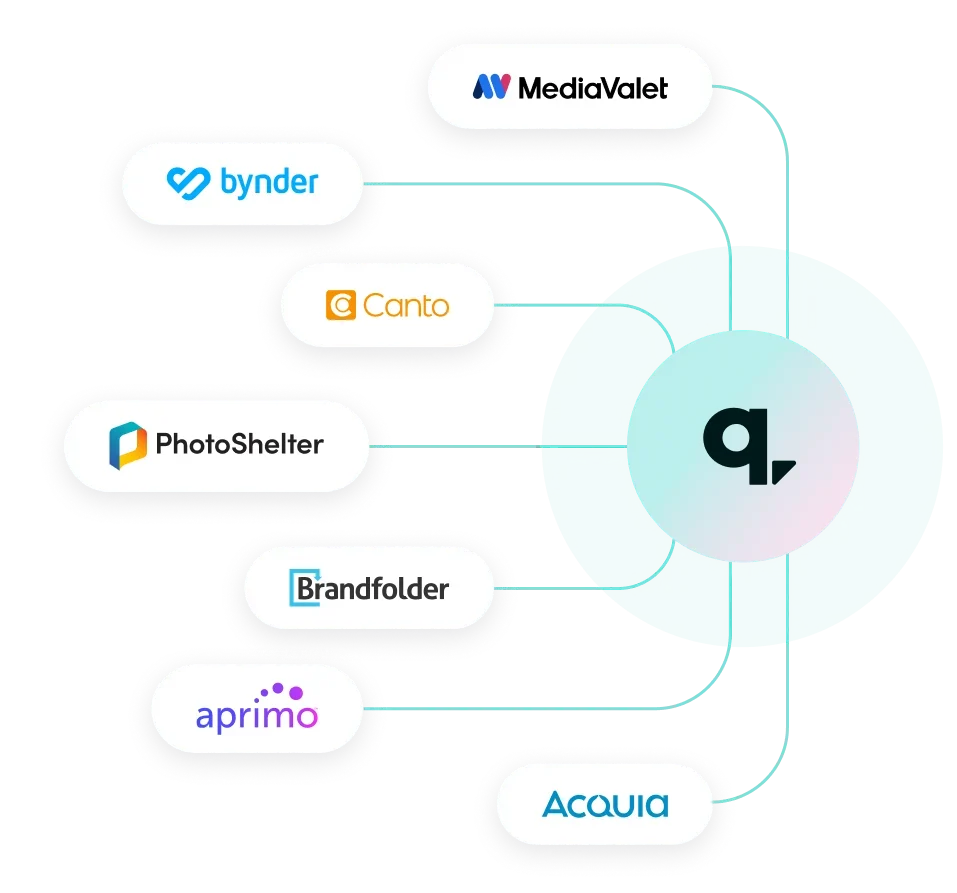
- Brand assets and templates in one library. Marq keeps approved logos, colors, fonts, and templates in one place, organized by team, location, or brand. Marq also connects to your existing DAM, such as MediaValet, so field teams can use stored assets inside their templates.
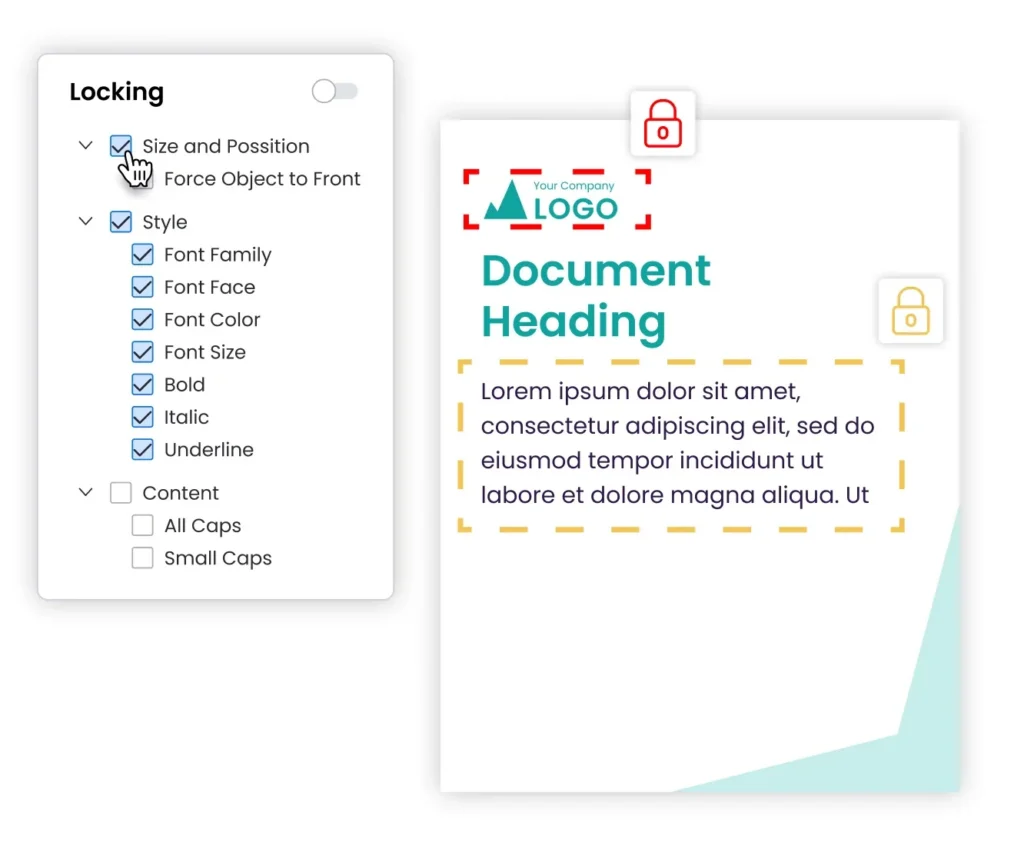
- Brand-safe templates. Designers build in Adobe InDesign or Marq, then lock the logo, colors, layout, and disclosures. Local teams edit only the fields you open, such as a listing address or an event date. This brand templating approach lets a regional office produce its own flyer without introducing brand inconsistencies.
- Smart fields and data automation. Smart fields fill in the right logo, disclaimer, or contact details based on the user, location, or department. Data from spreadsheets, MLS feeds, or your CRM can populate hundreds of personalized assets at once, from listing flyers for a brokerage to rate cards for a lending team.
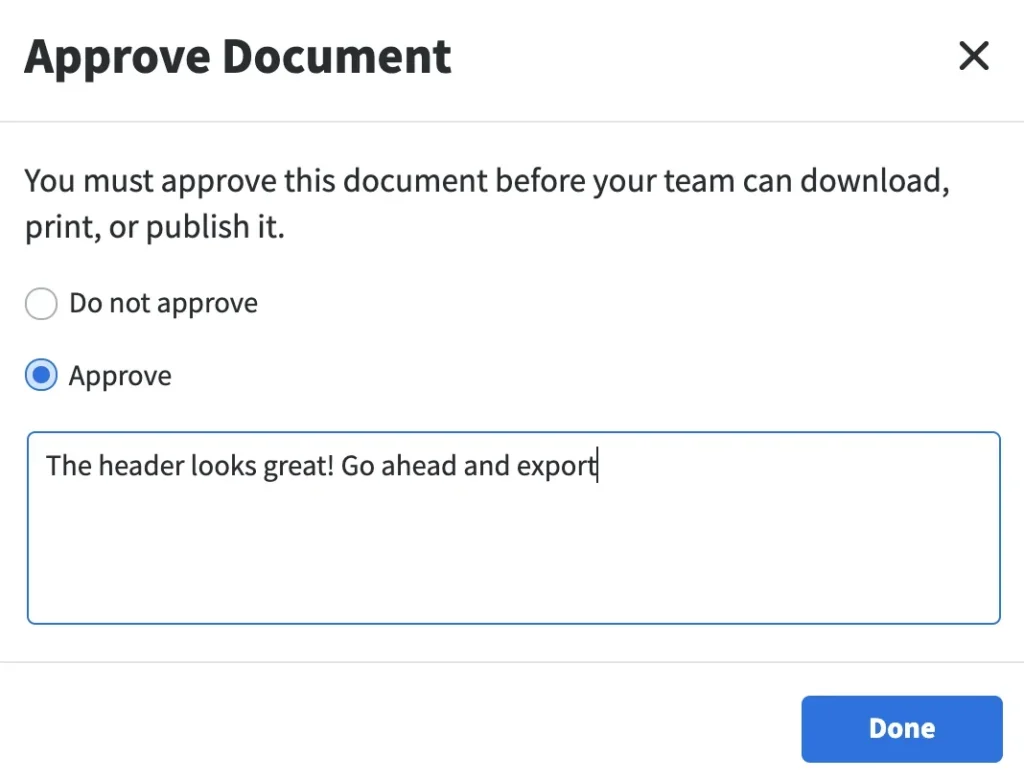
- Permissions and approval workflows. Custom roles, groups, and approval routing let you decide who can edit, who must review, and which experienced users can skip review. An insurance or financial services team can route regulated content to compliance before anyone sends it.
See how Marq fits your team’s workflow. Book a demo.
FAQs
How do you check brand authenticity?
Survey customers on whether your brand keeps its promises, deals honestly, reflects their values, and stays consistent over time, then compare the scores with review themes and NPS. Audit a sample of assets in circulation against your guidelines and claim register. Differences between your promises and customers’ experiences can help you choose what to fix first.
What damages brand authenticity?
Unsupported claims, values statements without matching action, and inconsistent materials across channels and locations. A branch reuses an old flyer with a retired logo or a promise the company no longer makes.
How can brands scale authentic content?
Define promises customers can check and assign an owner to each claim. Give local teams locked templates with editable fields for local details. Use approval workflows to route regulated content to reviewers, and use analytics to find files that need updates.